




Hastings Jeep – Which SUV Tows and Tracks Straight Better on Windy Highways — 2026 Jeep Grand Cherokee L vs 2026 Mazda CX-90 near Grand Island, NE?
When you are choosing a three-row SUV for family life around Grand Island, NE, two questions consistently rise to the top: how confidently will it tow and how easily will it track straight through Nebraska’s wide-open crosswinds? Let’s address both by comparing the core capability and confidence features you will use most.
Towing confidence starts with fundamentals
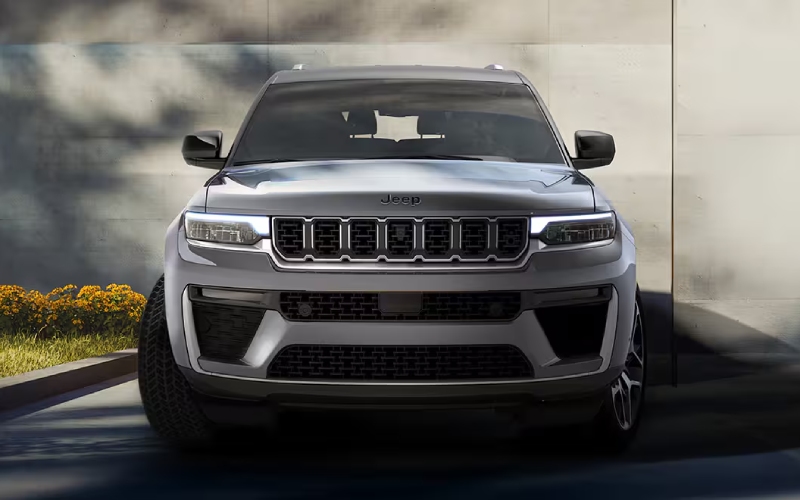
On paper and in practice, the Jeep is set up for hard-working weekends. With an available max towing rating above 6,000 pounds when properly equipped, the Grand Cherokee L has breathing room for small boats, side-by-side trailers, and pop-up campers. An available two-speed transfer case and Selec-Terrain modes (including Rock on properly equipped models) add that measured, low-speed control you want on dirt or at a wet boat ramp. The CX-90’s up-to-5,000-pound capacity when properly equipped will serve many light-duty needs well, yet its single-speed AWD driveline is aimed more at responsive pavement driving than inch-by-inch traction control on mixed surfaces.
Towing is not just about numbers; it’s about the last 50 feet before you park. That’s where the Jeep’s available Quadra-Lift Air Suspension can help, letting you raise for clearance or lower for easier hitching. It is a practical advantage you will appreciate when loading up in a sloped driveway or at an uneven trailhead lot.
Highway tracking in crosswinds
Nebraska’s long, straight stretches and steady winds test an SUV’s chassis balance and driver-assistance tech. Both models bring lane-centering and adaptive cruise, but the Jeep elevates the experience with available Hands-Free Active Driving Assist for those long, consistent routes. Pair that with the Grand Cherokee L’s calm steering and well-damped ride, and you get a comfortable, planted feel that reduces fatigue across miles. Mazda’s chassis tuning is responsive and refined—great for quick transitions—but at steady-state speeds with a family on board, the Jeep’s composure and feature set add a little more relief on blustery days.
Cabin smarts that make towing days easier
The features you use pre- and post-tow matter. Jeep’s available front passenger interactive display and class-exclusive available Interior FamCAM create a second set of eyes and a stress reducer: watch kids in the third row while you manage the route, or let your co-pilot handle navigation and trail maps without distracting the driver’s screen. The CX-90 offers a clear central display and a tasteful interior, but it does not add a passenger-side screen or an in-cabin camera dedicated to family monitoring.
- Hook-up ease: Jeep’s available Quadra-Lift lowers for hitching and raises for clearance on rough approaches.
- On-road calm: A composed ride and available Hands-Free Active Driving Assist help reduce fatigue on long, windy stretches.
- Family focus: Class-exclusive available Interior FamCAM and an available passenger display keep logistics organized.
Everyday drivability when you are not towing
Most days, you will be commuting, running errands, or shuttling to practice. Here, the Grand Cherokee L’s available power-folding third row is an everyday win—tap and reconfigure in seconds. Mazda relies on manual folding, which works, but it is not as seamless when you are juggling gear. Both vehicles offer tri-zone or better climate coverage; Jeep’s available Quad-Zone Automatic Temperature Control gives each area fine-grained control, helpful when third-row passengers run warmer or cooler than the front seats.
How to choose based on your towing and travel profile
- Weekend payloads: If your trailer and gear regularly push past 5,000 pounds, the Jeep’s higher available tow rating adds headroom.
- Surfaces you drive: If your routes include gravel, grass, or soft shoulders, Jeep’s two-speed transfer case and Selec-Terrain (with Rock where equipped) give a traction edge.
- Family logistics: Power-folding third row, a passenger display, and class-exclusive available Interior FamCAM make Jeep’s cabin easier to run.
Frequently Asked Questions:
Can both SUVs handle boat-ramp launches and gravel access roads?
Both can, but the Jeep’s available low-range transfer case and Selec-Terrain settings give it better control at very low speeds and on more uneven approaches. Mazda’s i-ACTIV AWD® is excellent on wet pavement and light trails, but is not designed for low-range crawling.
Will either model feel unsettled in strong crosswinds with a small trailer?
Any vehicle can move in gusts, but the Jeep’s chassis tuning and available driver-assistance features help keep inputs smooth. A proper weight distribution hitch and correct tire pressures will make a noticeable difference on either model.
Do I need air suspension for towing?
You do not need it, but Jeep’s available Quadra-Lift can make hitching and approach clearance easier and offers a more level stance with changing loads. If you are towing often or accessing uneven sites, it is a smart upgrade.
At the end of the day, choose the SUV that matches how you actually travel. If your family weekends include heavier loads, softer surfaces, or frequent gravel and grass parking, the Jeep’s added capability is the difference you can feel. The Mazda CX-90 is a fine, comfortable road traveler; the Grand Cherokee L goes wherever the day takes you, confidently. For tailored guidance and a walk-through of towing and assistance tech, visit Hastings Chrysler Dodge Jeep Ram, proudly serving Juniata, Grand Island, and Aurora.
Request more 2026 Jeep Grand Cherokee L information
Connect with us


- Chrysler Dealer
- Chrysler Dodge Jeep RAM Dealer
- Chrysler Pacifica
- Dodge Charger
- Dodge Dealer
- Dodge Durango
- Jeep
- Jeep Cherokee
- Jeep Compass
- Jeep Dealer
- Jeep Gladiator
- Jeep Grand Cherokee
- Jeep Grand Cherokee 4xe
- Jeep Grand Cherokee L
- Jeep Grand Wagoneer
- Jeep Grand Wagoneer L
- Jeep Wrangler
- RAM 1500
- RAM 2500
- RAM Dealer
- Used Dealer
- Wagoneer